Wag & Ride
Dog Car Sickness & Travel Anxiety
Practical, vet-informed tips to settle a dog that hates the car - and the gear that helps.
Car sickness
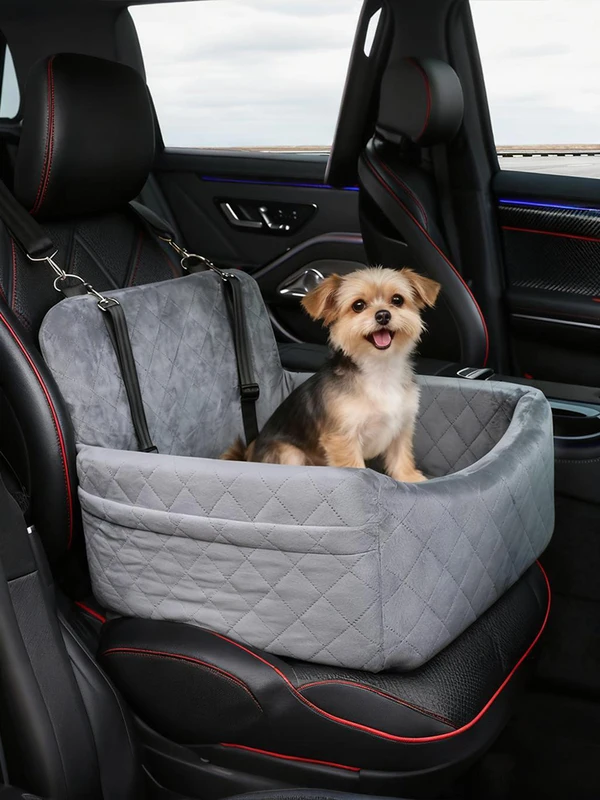
Most common in puppies and often outgrown. What helps: a raised, forward-facing position so the dog can see the horizon (a booster seat), a cool, well-ventilated car, no food for 2-3 hours before travel, and short, frequent practice trips that end somewhere good. Your vet can prescribe maropitant (Cerenia) for genuine motion sickness - it's very effective.
Travel anxiety
Different problem, different fix. Build positive associations: feed meals in the stationary car, then engine-on-and-off, then to the end of the road, then a 5-minute drive to a walk. A mesh-window hammock lets an anxious dog see you, which many find reassuring, while still stopping them climbing into the front. A snug, restrained position is calmer than a loose dog. A worn t-shirt that smells of you, a familiar blanket, and a long-lasting chew all help. For severe cases, ask your vet about short-term anti-anxiety medication and a referral to a clinical behaviourist.
What not to do
- Don't punish or fuss - both make it worse.
- Don't only ever drive to the vet.
- Don't leave the dog loose "so they can settle" - unrestrained travel is less safe and often more stressful.