Wag & Ride
Dog Car Safety & the Law (UK)
How to restrain your dog legally and safely in a car - harnesses, hammocks, crates, boot guards and airbags.
What the law actually says
The Highway Code, Rule 57: "When in a vehicle make sure dogs or other animals are suitably restrained so they cannot distract you while you are driving or injure you, or themselves, if you stop quickly. A seat belt harness, pet carrier, dog cage or dog guard are ways of restraining animals in cars." Breaking the Highway Code isn't itself an offence, but it can support a charge of driving without due care and attention (a fine, 3-9 points, or a ban) and insurers can reduce or refuse a claim if an unrestrained dog contributed to an accident.
The four accepted methods
- Seat-belt harness + tether - most practical for most cars. Use a crash-tested harness with a broad chest plate, clipped to the seat-belt buckle or a bungee tether. Never clip a tether to a collar.
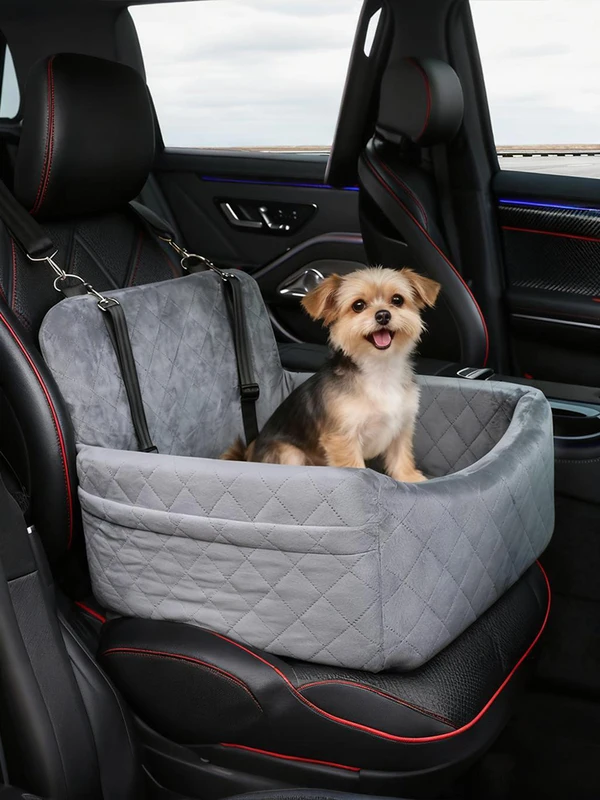
- Car seat or hammock with a tether - a booster seat or bench hammock keeps the dog in place and off the footwell; still clip the harness to the internal tether.
- Crate / carrier - a rigid crate strapped down in the boot is very safe for a medium dog if it fits.
- Boot + dog guard - a rigid guard between the boot and cabin, a boot liner, and a cargo tether. Best in an estate or SUV.
Airbags
If a dog must travel in the front, switch the passenger airbag off and slide the seat fully back. A deploying airbag can kill a dog. The back seat or boot is always safer.
Other rules of thumb
- Head out of the window: eye, ear and debris injuries - keep windows mostly up.
- Never leave a dog in a hot car - even 22°C outside can reach 47°C inside in an hour.
- Puppies and anxious dogs: a raised, restrained position beats a loose dog pacing the seats.